

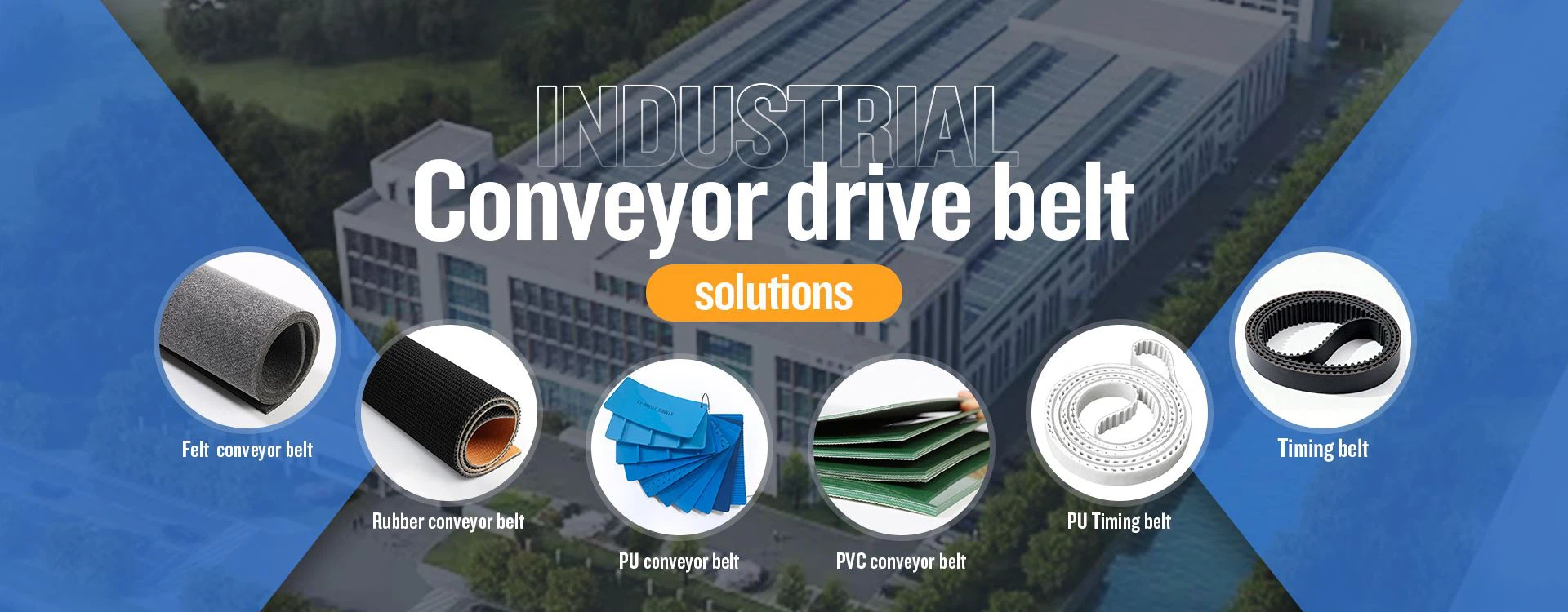
In the vast fields of industrial production and logistics transportation, belt conveyors, as crucial links connecting various production processes, their performance and material selection directly affect production efficiency, cost control, and safety and stability. This article will delve deeply into the common materials of belt conveyors, covering their material properties, applicable scenarios, and maintenance, providing you with a comprehensive analysis of the mysteries of this industrial "blood vessel".
1. Rubber Conveyor belts
Rubber conveyor belts are one of the most widely used types of belts. They are mainly composed of covering layers, core materials (such as canvas, polyester, etc.) and adhesives. According to different usage environments and requirements, rubber conveyor belts can be classified into various types, such as ordinary type, heat-resistant type, oil-resistant type, cold-resistant type and flame-retardant type, etc.
- ** Ordinary rubber conveyor belt ** : It is suitable for the transportation of general materials such as coal, ore, sand and gravel, etc., and has good wear resistance and tear resistance.
- ** Heat-resistant rubber conveyor belt ** : It is particularly suitable for material transportation in high-temperature environments, such as cement clinker and hot coke, and can maintain stable physical properties at high temperatures.
- ** Oil-resistant rubber Conveyor belt ** : For materials containing oil or chemical solvents, special formula rubber is adopted to effectively resist oil erosion and maintain the good performance of the conveyor belt.
Ii. PVC Conveyor Belts
PVC (polyvinyl chloride) conveyor belts are widely used in the food, pharmaceutical, electronic and other industries due to their light weight, corrosion resistance and easy processing. The surface of PVC conveyor belts is smooth, easy to clean, and has good stability against most chemicals, making them suitable for occasions with high hygiene requirements.
- ** Food-grade PVC conveyor belt ** : Made of non-toxic, odorless materials that meet FDA and EU food safety standards, it is widely used in food processing and packaging production lines to ensure product safety and no pollution.
- ** Acid and Alkali Resistant PVC Conveyor belt ** : A special formula designed for acidic and alkaline environments, effectively resisting chemical corrosion and extending service life.
Iii. PU Conveyor Belts
PU (polyurethane) conveyor belts, with their high elasticity, high wear resistance, tear resistance, and excellent oil and water resistance, have become the top choice in the high-end market. PU conveyor belts perform exceptionally well in light-load, high-speed and precision transmission fields, such as electronics, textiles, printing and other industries.
- ** High-elasticity PU Conveyor belt ** : Suitable for occasions that require frequent start-stop or speed change, it can effectively absorb shock, reduce equipment vibration and noise.
- ** Anti-static PU Conveyor Belt ** : Specially added conductive materials effectively prevent static electricity accumulation and protect sensitive electronic components from damage.
Four. Steel Cord Conveyor Belt
Steel cord conveyor belts, with their outstanding tensile strength and long-distance, high-load conveying capacity, have become the preferred choice for large-scale projects such as mines, ports, and power plants. It is internally embedded with high-strength steel wire ropes as the core, and the outer layer is covered with rubber, forming a sturdy and durable conveying structure.


