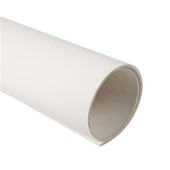
Conveyor belt
The basic working principle of the conveyor belt system is friction drive
The motor in the drive unit starts, driving the reducer, which in turn drives the drive roller to rotate
As the conveyor belt is tensioned between the drive roller and the redirecting roller, sufficient friction is generated between the roller and the inner surface of the belt
This frictional force drives the entire conveyor belt to continuously cycle along the path supported by idlers
The materials are placed at one end of the belt (the loading point) and are conveyed to the other end (the unloading point) as the belt moves, where they are discharged by gravity or a unloading device
A complete conveyor belt system is usually composed of conveyor belts, idlers, rollers, tensioning devices, drive units, frames, cleaners and protective devices
As the "working main body" of the conveyor belt system, the conveyor belt directly carries materials
Idlers are used to support the conveyor belt and the materials on it, reducing running resistance
Trough-shaped idlers are used in the load-bearing section, usually in three sections, forming a trough shape to increase the transportation volume
Parallel idlers are used for support in the return section (lower belt) or in the load-bearing section for conveying individual items
Self-aligning idlers can be used to automatically correct the deviation of belts
Buffer idlers are installed at the loading points to absorb the impact of materials and protect the conveyor belt
The roller that provides power is the drive roller, which is usually driven by a motor through a reducer
A redirecting roller is one that changes the running direction of the conveyor belt or increases the wrap Angle between the belt and the driving roller
The tensioning device can provide and maintain sufficient tension for the conveyor belt, ensuring normal friction transmission and appropriate sag. Common types include hammer type, screw type and hydraulic automatic tensioning type
The drive unit provides power for the conveyor belt and typically includes an electric motor, reducer, coupling, backstop/brake, etc
The frame made of metal structural components is used to support and install all parts of the conveyor belt such as idlers and rollers
The head cleaner is installed at the drive roller to remove the materials adhering to the working surface of the belt
The empty section cleaner is installed near the tail roller to clean the debris on the non-working surface of the belt
Protective devices are used to ensure the safe operation of the system, such as deviation switches, pull rope switches, speed detectors, anti-tear devices, etc
3. Conveyor belts have almost permeated all industrial fields
Mining, port terminals, power industry, cement and building materials, food and beverage, chemical and pharmaceutical, automotive manufacturing, warehousing and logistics, agriculture, commerce
One mechanical trivia every day - conveyor belts
Feb 25, 2026
Leave a message
You Might Also Like