

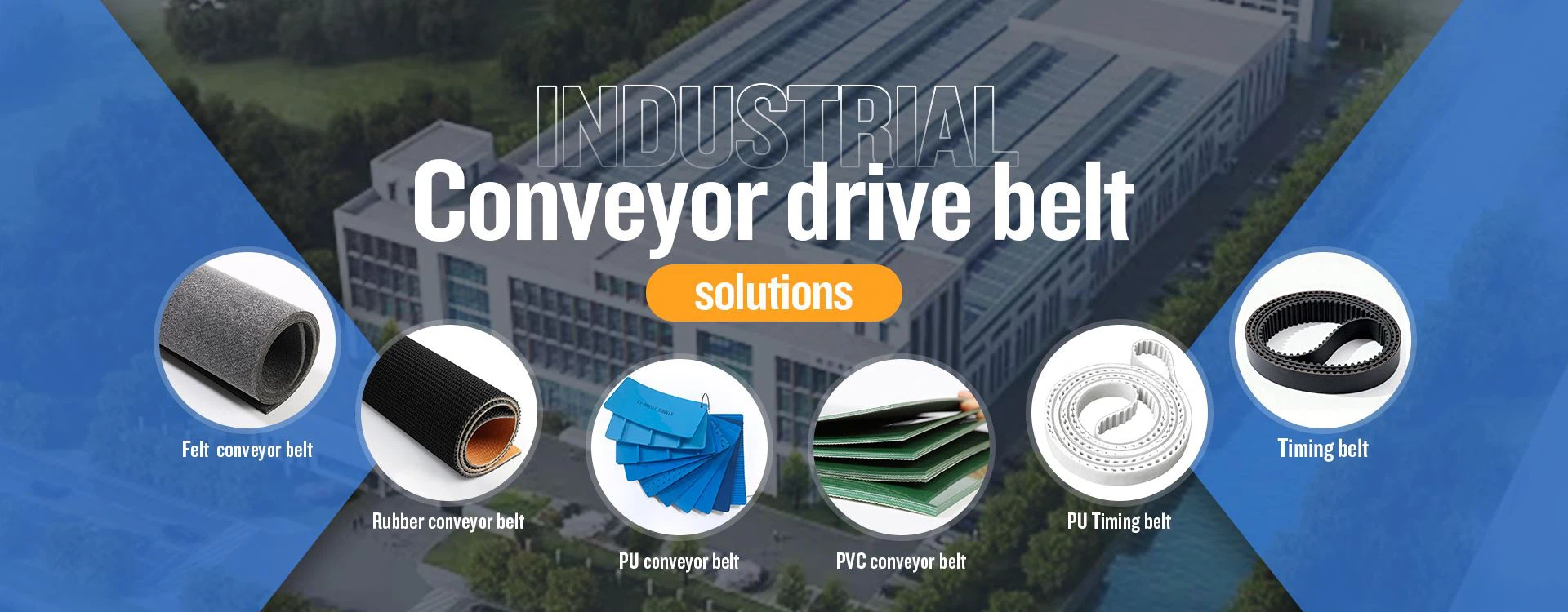
Timing Belt
Your Professional Timing Belt Manufacturer!
We specialize in the manufacturing and supply of high-performance timing belts for industrial and power transmission applications. Our product range includes rubber timing belts, polyurethane timing belts, synchronous belts, and customized drive solutions. With advanced production capacity and stable global supply, our timing belts are exported to markets such as the United States, Germany, Italy, Brazil, India, Southeast Asia, and the Middle East, serving OEMs, distributors, and industrial end users worldwide.
Product Application
Widely used in automotive systems, industrial machinery, agricultural equipment, automation lines, packaging machines, and power transmission systems.
Professional Service Support
Experienced timing belt engineering team providing efficient OEM and ODM services, technical support, and stable long-term cooperation.
Industry Experience
With years of experience in timing belt manufacturing and export, we have in-depth knowledge of materials, tooth profiles, transmission performance, and global market requirements.
Fast Response
All inquiries are handled within 24 hours to ensure fast quotation, technical communication, and efficient order processing.


A timing belt is a synchronous transmission belt designed with precision-molded teeth on its inner surface, allowing it to engage accurately with pulleys. It is used to transmit power and synchronize the rotation of shafts without slippage. Timing belts are commonly made from rubber or polyurethane and reinforced with high-strength tensile cords such as fiberglass, steel, or aramid, ensuring stable performance, low noise, and long service life in industrial and automotive applications.
Accurate Transmission
Timing belts ensure precise synchronization between components, preventing speed variation and positioning errors during operation.
High Reliability
With reinforced tensile cords and wear-resistant materials, timing belts offer excellent durability and consistent performance.
Low Maintenance
Timing belts operate without lubrication, reducing maintenance costs while delivering quiet and efficient power transmission.
Timing Belt Product Features
Our timing belts are engineered to deliver reliable, precise, and efficient power transmission across a wide range of industrial applications.

Precise Synchronization
Timing belts provide exact and consistent tooth engagement with matching pulleys, ensuring zero slippage and highly accurate motion control in high-precision mechanical systems.
This precise meshing mechanism allows power to be transmitted smoothly without speed fluctuation or positional error.
As a result, timing belts are ideal for applications that require stable speed ratios, precise positioning, and perfectly synchronized movement, such as automated production lines, CNC machines, packaging equipment, and precision conveying systems.
High Load Capacity
Reinforced with high-strength tensile cords such as fiberglass, steel wire, or aramid fiber, timing belts are designed to withstand heavy loads and transmit high levels of torque efficiently.
The internal reinforcement structure effectively prevents belt stretching and deformation during operation.
Even under continuous operation, high rotational speeds, or demanding industrial environments, timing belts maintain excellent dimensional stability, ensuring consistent performance, reliable power transmission, and long-term operational safety.


Low Noise Operation
The optimized tooth profile and precision manufacturing process significantly reduce vibration, friction, and impact noise during belt engagement with pulleys.
This design minimizes mechanical resonance and ensures smoother power transfer throughout the entire operating cycle.
As a result, timing belts deliver quiet and stable performance, making them especially suitable for automated machinery, precision equipment, office machinery, and noise-sensitive industrial environments where smooth operation is essential.
Durable & Long Service Life
Manufactured from high-quality, wear-resistant materials, timing belts offer excellent resistance to heat, oil, abrasion, fatigue, and aging under various operating conditions.
Advanced rubber compounds and reinforced structures enhance overall durability and mechanical strength.
This robust construction results in an extended service life, reduced replacement frequency, lower maintenance costs, and improved overall reliability, helping users achieve higher efficiency and long-term cost savings in their power transmission systems.
Timing Belt Structure
Understanding the core components that ensure precise and reliable power transmission.
Glass Fiber Tensile Layer
The glass fiber tensile layer is composed of multiple high-strength glass fiber cords spirally wound along the pitch line of the timing belt. This layer provides excellent tensile strength, minimal elongation, and superior resistance to heat and fatigue, ensuring stable belt length and accurate synchronization during long-term operation.
01
Rubber Belt Body
The rubber belt body firmly bonds the tensile cords to the toothed section of the timing belt. It acts as a protective and load-distributing layer, reducing internal stress, preventing cord damage, and enhancing flexibility and durability during continuous and high-speed transmission.
02
Precision Molded Belt Teeth
The belt teeth are manufactured from high-shear-strength rubber compounds and precisely molded to ensure accurate tooth geometry and uniform pitch distribution. This guarantees perfect engagement with pulley grooves, maintains constant speed ratios, and prevents slippage under varying load conditions.
03
Nylon Fabric Protective Layer
The nylon fabric layer covers the tooth surface as a low-friction protective coating. It significantly improves wear resistance, reduces noise and vibration, and extends the service life of the timing belt, especially in high-speed, high-cycle, and precision-driven applications.
04
Quality Certifications & Test Reports (Timing Belt)


ISO 9001 Certified Timing Belt Manufacturing

SGS Material & Safety Test Reports for Timing Belt

Industrial Timing Belt Quality Assurance Documentation
Certified Quality & Compliance for Timing Belt
ISO 9001 Quality Management System
Our Timing Belt manufacturing strictly follows the ISO 9001 quality management system. Certified by internationally recognized authorities, our production process ensures standardized control, consistent quality, and reliable performance for precision power transmission and synchronized motion applications.
SGS Material & Performance Testing
Timing Belt materials have passed SGS testing covering tensile strength, wear resistance, heat resistance, and material stability. These test results confirm suitability for continuous operation in industrial automation, machinery transmission, and precision equipment.
Reliable Industrial Quality Assurance
All tested Timing Belt samples achieved PASS results in durability and performance evaluations. This guarantees long service life, dimensional stability, and compliance with international industrial standards for timing belt drive systems worldwide.
Why Choose Us for Timing Belt Manufacturing?
We are a professional manufacturer and exporter specializing in Timing Belt solutions for global industrial applications. With manufacturing expertise dating back to 1998, our factory focuses on delivering high-precision Timing Belts that ensure accurate power transmission, stable synchronization, and long service life. All Timing Belts are produced under strict quality management systems, tested to meet international standards, and verified through third-party inspections such as SGS. From standard models to fully customized designs, we support OEM and industrial customers with reliable quality, competitive pricing, and consistent supply capability.
One-Stop Timing Belt Manufacturing
Industry Experience Since 1998
100% Inspection & Stable Quality
Shipping & Payment for Timing Belt Orders
To support efficient global procurement of Timing Belts, we provide flexible shipping arrangements, clear delivery timelines, and secure payment terms. Our logistics and export process is designed to ensure fast response, reliable packaging, and on-time delivery for both standard and customized Timing Belt orders, helping customers reduce lead time and inventory pressure.

Timing Belt Shipping Policy
We offer free Timing Belt samples for quality evaluation before bulk orders. For customized size Timing Belts, the standard delivery time is approximately 3–5 days, while Timing Belts supplied in roll material typically require 7–12 days. Shipments are arranged via sea freight from Xiamen Port, supporting FOB and CIF trade terms to meet different international logistics requirements.
Payment Terms & Packaging
Accepted payment methods include T/T and Western Union. Standard payment terms are 30% prepayment with the remaining 70% balance settled before shipment. Timing Belts are packed using PE foam as standard protection, with customized packaging solutions available upon request to ensure safe transportation and product integrity during international delivery.

Frequently Asked Questions
Xiamen Hee Industrial Belt Co., Ltd. is one of the leading timing belt manufacturers and suppliers in China. Feel free to buy timing belt from our factory. We must be your best choice!
timing belt profiles, timing belt drive design, industrial timing belts