

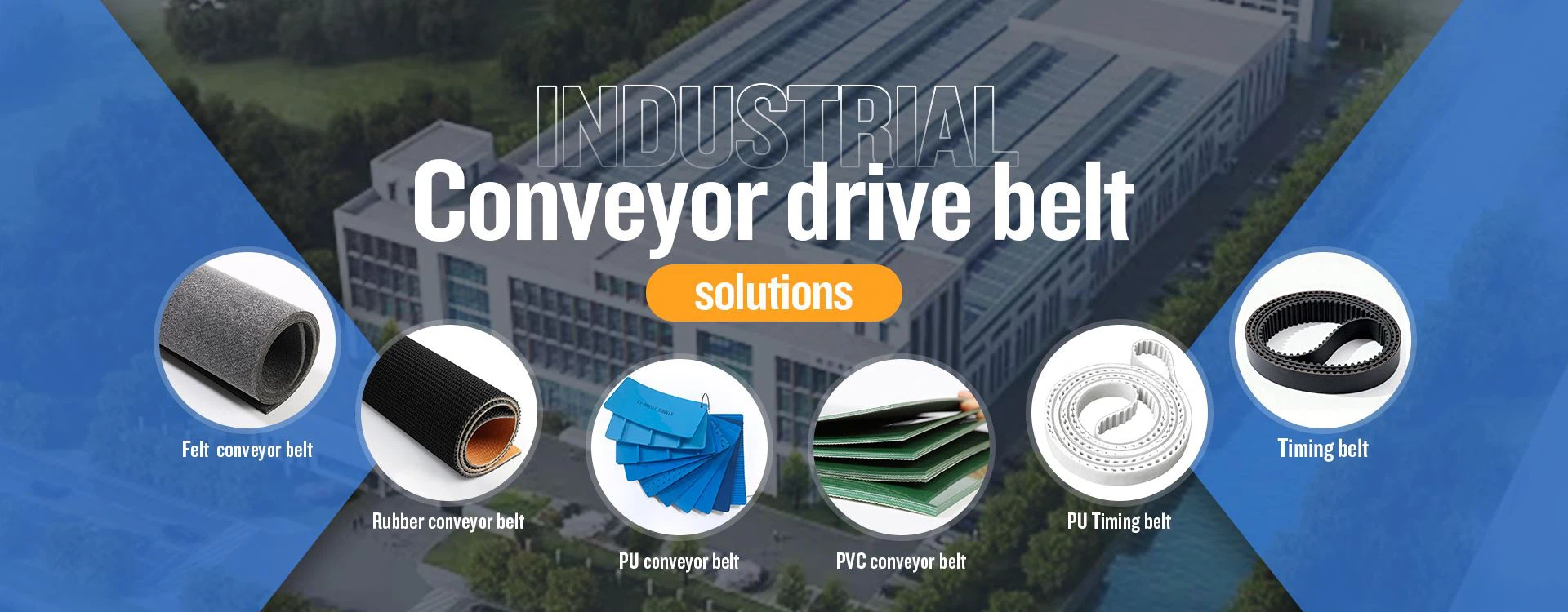
Transmission Belt
What Is a Transmission Belt
A transmission belt is a core mechanical power transmission component used to transfer motion and torque between rotating shafts in industrial, automotive, agricultural, and automation systems. By relying on frictional engagement or positive tooth meshing, a transmission belt enables efficient, stable, and continuous power delivery from a driving pulley to one or more driven pulleys. Compared with direct-drive systems or chain transmission, transmission belts provide a flexible, lightweight, and cost-effective solution for managing speed ratios, absorbing vibration, and reducing operational noise across a wide range of working conditions.
Transmission belts are commonly manufactured from advanced polymer compounds, reinforced rubber, polyurethane, or composite materials that combine tensile cords, fabric layers, and wear-resistant surfaces. These material structures are carefully engineered to ensure high tensile strength, excellent fatigue resistance, dimensional stability, and long service life even under continuous operation. Depending on application requirements, transmission belts can be designed to operate at high speeds, handle heavy loads, withstand oil or chemical exposure, or perform reliably in extreme temperature environments.
Benefits of Transmission Belt Systems
Efficient Power Transmission: Transmission belts deliver power smoothly and efficiently between shafts, minimizing energy loss through vibration or impact. Their ability to maintain consistent speed ratios helps optimize machine performance and improve overall system efficiency in continuous operation.
Flexible System Design: Unlike rigid gear systems, transmission belts allow greater flexibility in machine layout and shaft positioning. This makes them ideal for complex equipment designs where space constraints or variable center distances must be accommodated.
Low Noise and Vibration: The elastic nature of transmission belts helps absorb shock loads and dampen vibration during operation. This results in quieter machinery, improved operator comfort, and reduced mechanical stress on connected components.
Reduced Maintenance Requirements: Transmission belts typically require minimal lubrication and simpler maintenance compared with chains or gear drives. Proper belt selection and tensioning can significantly extend service intervals and lower total maintenance costs.
High Load Adaptability: Modern transmission belts are engineered to handle a wide range of loads, from light-duty precision equipment to heavy industrial machinery. Reinforced tensile cords and advanced materials ensure reliable performance under demanding conditions.
Energy Efficiency and Cost Control: By reducing friction losses and protecting equipment from sudden load spikes, transmission belts contribute to lower energy consumption and longer component life, supporting long-term operational cost control.
Wide Application Versatility: Transmission belts are used across industries including manufacturing, logistics, food processing, agriculture, automotive systems, and packaging machinery. Their versatility allows one transmission principle to serve multiple industrial scenarios.
Enhanced Equipment Protection: In the event of overload or sudden stoppage, transmission belts can slip or absorb impact forces, helping to protect motors, bearings, and gear components from severe damage and extending overall equipment lifespan.


Why Choose Us for Transmission Belt Solutions
Consistent Product Quality
We specialize in supplying high-performance transmission belt products designed for industrial power transmission systems. Each transmission belt is manufactured using controlled material formulations, reinforced tensile layers, and precision production processes to ensure durability, dimensional stability, and reliable power transfer under continuous operation.
01
Industry Experience
Our team has extensive experience in the transmission belt industry, with in-depth understanding of industrial machinery, power transmission requirements, and application-specific belt selection. We support customers across manufacturing, automation, logistics, and processing industries.
02
Professional Technical Support
We provide responsive technical consultation throughout the transmission belt selection and procurement process. From belt type recommendations to operating condition analysis, our support team helps customers optimize performance, reduce downtime, and extend service life.
03
Competitive Cost Structure
By integrating stable supply chains and efficient production management, we offer transmission belt solutions with competitive pricing while maintaining strict quality standards. This enables customers to achieve reliable power transmission without unnecessary cost pressure.
04
Application Expertise
We understand that each transmission belt application has unique operating loads, speeds, and environmental conditions. Our expertise ensures that customers receive belt solutions tailored to their specific equipment and performance requirements.
05
Typical Applications of Transmission Belts
Industrial Manufacturing Equipment
Transmission belts are widely used in manufacturing equipment to transmit power between motors, gearboxes, and rotating components. They support stable speed control, smooth operation, and reduced vibration in machining centers, assembly lines, and automated production systems.


Automated Conveying Systems
In conveyor and material handling systems, transmission belts ensure consistent movement, accurate synchronization, and efficient power distribution. They are essential for logistics centers, packaging lines, and continuous transport operations.
Agricultural Machinery
Transmission belts are commonly used in agricultural equipment such as harvesters, seeders, and processing machines. Their flexibility and shock-absorbing properties make them suitable for variable loads and outdoor working environments.


HVAC and Industrial Fans
Transmission belts are used in HVAC systems and industrial fans to transfer power efficiently while minimizing noise and vibration. This helps improve system reliability and energy efficiency in long-term operation.
Transmission Belt vs Chain and Gear Drives
Operating Characteristics
Transmission belts provide smoother and quieter power transfer compared with chains and gears. Their elastic properties help absorb vibration and shock loads, making them ideal for applications requiring stable and low-noise operation.
Maintenance and Cost
Compared with chain or gear drives, transmission belts typically require less lubrication and simpler maintenance. This results in lower long-term operating costs and reduced equipment downtime.
Design Flexibility
Transmission belts allow greater flexibility in shaft alignment and center distance design, enabling more adaptable equipment layouts and compact mechanical systems.
Transmission Belt System Working Process
Power input from the driving motor or engine
Torque transfer through belt-to-pulley engagement
Continuous rotation and speed synchronization
Shock absorption and vibration reduction during operation
Stable power output to driven components
Quality Certifications & Test Reports
Certified quality management and safety compliance for Transmission Belt manufacturing

ISO 9001 Certified Transmission Belt Manufacturing
Our Transmission Belt production strictly follows ISO 9001 quality management system standards. Certified by EACC, our factory ensures stable processes, consistent product quality, and reliable manufacturing control for PVC and PU transmission belts.

SGS Food Contact Safety Test – EU Compliance
Transmission Belt materials have passed SGS testing in accordance with EU Commission Regulation No.10/2011. Overall migration and specific heavy metal migration tests confirm the belts are safe for food-related conveying and industrial applications.

Reliable Quality Assurance for Industrial Transmission Belt
All tested Transmission Belt samples achieved PASS results for plastic migration and heavy metal limits. This ensures long-term safety, durability, and compliance for industrial transmission systems and conveyor applications worldwide.
Proper maintenance of Transmission Belt is essential to ensure stable operation, extend service life and reduce downtime. Regular inspection, correct installation, suitable tension adjustment and timely cleaning can effectively prevent belt deviation, premature wear and unexpected failures. Working with professional manufacturers allows customized maintenance guidance based on different applications and operating conditions.
Correct Installation
Ensure the Transmission Belt is installed with proper alignment and tension to avoid slippage, edge wear and abnormal noise.
Regular Cleaning
Keep the belt surface clean from oil, dust and residue to maintain friction performance and prevent material buildup.
Routine Inspection
Inspect Transmission Belt condition regularly to detect cracks, wear or edge damage at an early stage.
Proper Tension Control
Maintain suitable belt tension to reduce stress on rollers and bearings while ensuring smooth transmission.
Technical Guidance
Professional technical support helps optimize Transmission Belt performance under different loads, speeds and environments.
Replacement Planning
Planned replacement based on operating conditions prevents unexpected shutdowns and reduces overall maintenance costs.
How to Cooperate With Us
Cooperating with us is simple and efficient. As a professional Transmission Belt manufacturer, we work closely with global clients to understand application requirements, operating conditions and technical specifications.
From initial inquiry and technical consultation to sample confirmation and mass production, our team provides clear communication and fast response at every stage.
Whether for standard Transmission Belt supply or OEM customized solutions, we ensure stable quality, reliable delivery and long-term cooperation.

XINBEX Transmission Belt Manufacturer
XINBEX is a professional Transmission Belt manufacturer founded in 1998, specializing in PVC and PU industrial transmission belts. With advanced production bases in Xiamen, Tianjin and Suzhou, we integrate R&D, manufacturing and global supply. Our factory operations and production strength are fully presented in our company introduction video: https://youtu.be/LMUHMUrENno
Large-Scale Manufacturing Capacity
Over 20,000㎡ production base with wide-width Transmission Belt production lines, ensuring stable output, consistent quality and fast delivery.
ISO Standardized Production System
Certified under ISO 9001 quality management system, every Transmission Belt is controlled from raw material selection to final inspection.
Customized Transmission Belt Solutions
We provide one-stop customized Transmission Belt solutions, covering design, material selection, molding, testing and mass production.
Asked Questions
Xiamen Hee Industrial Belt Co., Ltd. is one of the leading transmission belt manufacturers and suppliers in China. Feel free to buy transmission belt from our factory. We must be your best choice!
flat belt power transmission, Transmission Belt, transmission drive belt