

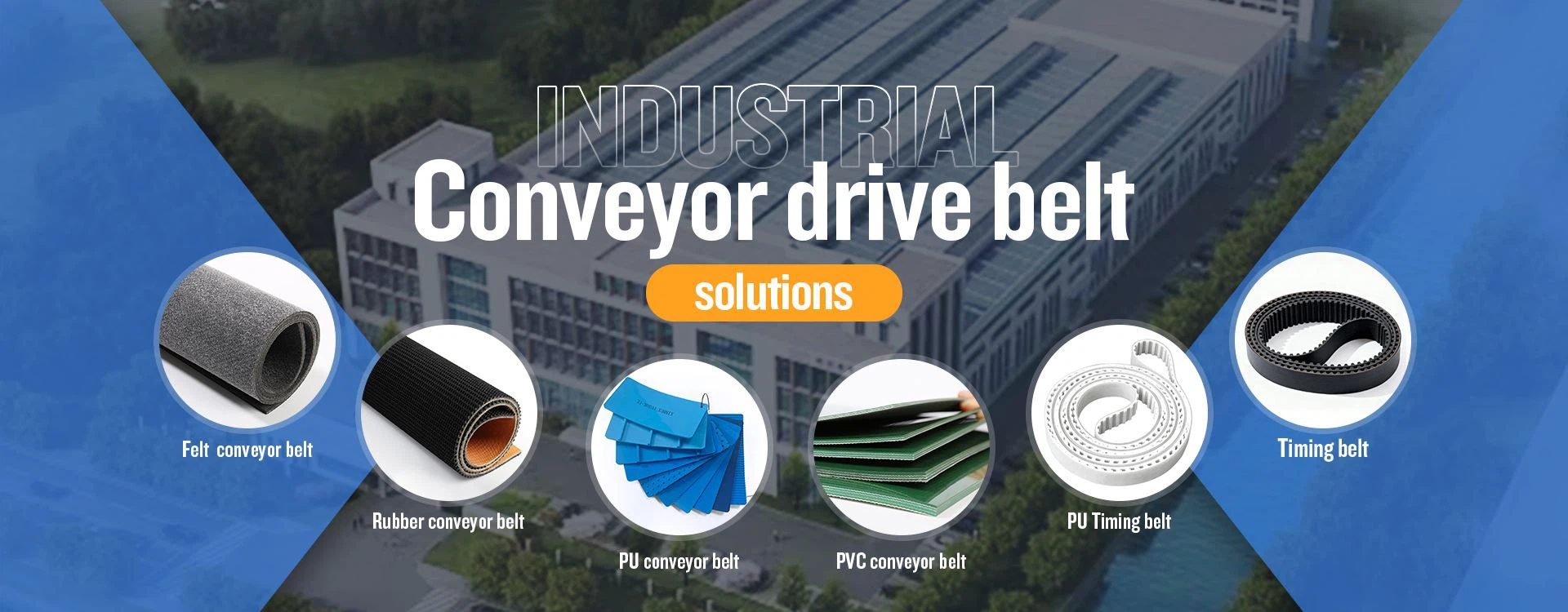
PU Conveyor Belt
A PU conveyor belt is a conveyor belt made of polyurethane material, widely used in food processing, logistics, packaging, electronics, pharmaceuticals, and light industrial applications. Compared with traditional rubber belts, PU conveyor belts offer superior abrasion resistance, chemical stability, flexibility, and hygiene performance.
PU conveyor belts are designed to provide smooth conveying, reliable traction, and long service life. They can be customized in thickness, surface pattern, color, hardness, and tensile strength to meet specific application requirements in modern automated production lines.
Advantages of PU Conveyor Belt
Excellent Wear Resistance: PU conveyor belts provide outstanding resistance to abrasion, cutting, and tearing, ensuring stable performance even under continuous operation.
Food-Grade and Hygienic: PU material meets food safety standards, is non-toxic, odorless, and easy to clean, making it ideal for food and pharmaceutical industries.
High Flexibility: PU belts maintain flexibility even at low temperatures, ensuring smooth operation on small pulleys and curved conveyors.
Chemical and Oil Resistance: PU conveyor belts resist oils, fats, solvents, and cleaning agents, extending belt life in demanding environments.
Low Noise Operation: Smooth surfaces and stable traction reduce vibration and noise, improving the working environment.
Customizable Design: PU conveyor belts can be customized with cleats, sidewalls, perforations, and surface patterns to suit specific conveying needs.


Why Choose Us
Professional Manufacturing Experience
We specialize in PU conveyor belt production with rich industry experience, serving customers worldwide with stable and reliable solutions.
Strict Quality Control
Every PU conveyor belt is manufactured under strict quality inspection to ensure consistent thickness, tensile strength, and surface finish.
One-Stop Custom Solution
From material selection to belt fabrication and processing, we provide one-stop OEM and ODM conveyor belt solutions.
Competitive Pricing
Efficient production management and cost control allow us to offer high-quality PU conveyor belts at competitive prices.
Main Components Of PU Conveyor Belt System
PU Belt Body
The PU conveyor belt body is the core load-bearing and conveying component of the entire system. Manufactured from high-performance thermoplastic polyurethane, PU belts combine excellent abrasion resistance, flexibility, oil resistance, and hygiene safety. XINBEX PU conveyor belts are engineered with consistent thickness, stable tensile strength, and smooth or textured surfaces to ensure reliable material handling in food processing, logistics automation, packaging lines, pharmaceutical production, and light industrial conveying. Compared with PVC or rubber belts, PU belts provide superior service life, lower maintenance frequency, and compliance with FDA and EU food-grade standards, making them a preferred choice for modern automated factories.
Reinforcement Layer
The reinforcement layer determines the belt’s tensile strength, dimensional stability, and load capacity. XINBEX integrates high-quality polyester fabric, aramid fiber, or multi-ply textile reinforcement within the PU structure to meet different conveying demands. This layer minimizes elongation, ensures accurate tracking, and supports stable operation under continuous load, high-speed transport, and frequent start-stop cycles. For buyers, the correct reinforcement configuration directly affects belt lifespan, energy efficiency, and long-term operating costs.
Surface Pattern & Coating
The surface design of a PU conveyor belt plays a critical role in material grip, positioning accuracy, and product protection. XINBEX offers smooth, matte, glossy, rough-top, cleated, and custom-textured PU surfaces tailored to specific applications. Optional coatings improve cut resistance, anti-static performance, or chemical tolerance. From food-grade white belts to anti-slip green logistics belts, surface customization allows buyers to optimize productivity while reducing product damage and slippage.
Drive & Support Components
PU conveyor belts operate in coordination with drive rollers, idlers, sliders, and conveyor frames. Precision-matched belt thickness and hardness ensure smooth engagement with drive pulleys, reducing vibration and noise. XINBEX provides technical guidance on pulley diameter, tracking systems, and tensioning methods to ensure optimal belt performance, extended service life, and reduced downtime.
Joint & Processing Method
PU conveyor belts can be supplied endless molded or joined using hot press, finger splice, or mechanical fasteners. XINBEX specializes in precision hot-press splicing to ensure smooth joints, high tensile efficiency, and minimal impact on conveying accuracy. Proper joint selection is a key purchasing consideration, as it directly affects belt strength, hygiene, and maintenance requirements.
Quality Control & Certification
Consistent performance depends on strict quality control. XINBEX applies standardized inspection processes, including tensile testing, thickness tolerance checks, surface inspection, and hygiene compliance verification. For global buyers, certifications and stable batch consistency reduce sourcing risks and ensure reliable long-term cooperation.
What Does a PU Conveyor Belt Do
A PU conveyor belt is a critical component in modern material handling systems, designed to transport products efficiently, safely, and hygienically across production and logistics processes. From food processing lines to automated warehouses, PU conveyor belts enable continuous movement, precise positioning, and stable operation under demanding industrial conditions. For manufacturers and system integrators, selecting the right PU conveyor belt directly impacts productivity, operational stability, and total cost of ownership.
Stable Product Transportation
PU conveyor belts provide a smooth, continuous surface that ensures stable transportation of goods without interruption. XINBEX PU belts are engineered to maintain consistent speed, minimize slippage, and handle varying loads with precision. This stability is essential for automated production lines where timing, alignment, and repeatability are critical to output quality.
Hygienic & Safe Conveying
In industries such as food, beverage, and pharmaceuticals, hygiene is non-negotiable. PU conveyor belts feature non-toxic materials, smooth surfaces, and easy-to-clean structures. XINBEX designs belts that comply with international food-grade standards, helping buyers meet regulatory requirements while reducing contamination risks.
Process Efficiency Optimization
Beyond transportation, PU conveyor belts contribute to overall process efficiency. Proper belt selection reduces energy consumption, lowers maintenance frequency, and minimizes unplanned downtime. XINBEX supports buyers with application analysis and belt customization, ensuring the belt matches speed, load, and environmental requirements for long-term operational success.

How Do I Know My PU Conveyor Belt Isn’t Working Properly
These operational signs indicate that your PU conveyor belt system requires inspection or replacement
Abnormal Tracking or Belt Deviation
If a PU conveyor belt consistently runs off-center, it may indicate improper tension, worn rollers, or structural misalignment. Prolonged deviation accelerates edge wear and increases downtime risk. XINBEX recommends early correction to avoid secondary damage.
Reduced Conveying Efficiency
Slippage, inconsistent speed, or product accumulation often signal surface wear or incorrect belt specification. Selecting a properly textured PU belt from XINBEX can restore grip and throughput.
Visible Surface Damage
Cracks, cuts, or delamination reduce belt strength and hygiene performance. In food or pharmaceutical lines, surface damage also increases contamination risks and should be addressed immediately.
Increased Noise or Vibration
Unusual noise often results from belt hardening, pulley mismatch, or joint failure. High-quality PU belts with accurate thickness and proper splicing significantly reduce vibration and mechanical stress.
Frequent Maintenance or Unexpected Downtime
Repeated maintenance issues often indicate an unsuitable belt specification. Working with an experienced manufacturer like XINBEX helps buyers select belts optimized for load, speed, and environment, reducing long-term operating costs.
What Is the Difference Between PU Conveyor Belts and Traditional Conveyor Belt Materials
The core difference between PU conveyor belts and traditional conveyor belt materials lies in their material composition, application environments, hygiene performance, and long-term operational efficiency in industrial conveying systems.
PU conveyor belts are manufactured using thermoplastic polyurethane, offering a balanced combination of flexibility, abrasion resistance, oil resistance, and hygienic properties. They are widely used in food processing, packaging, logistics automation, pharmaceutical production, and precision manufacturing lines where cleanliness, stability, and consistent conveying performance are critical.
Traditional conveyor belts, such as PVC, rubber, or fabric-reinforced belts, are typically applied in heavy-duty or low-cost environments. While they may provide basic conveying functionality, they often fall short in hygiene compliance, wear resistance, and long-term cost efficiency compared with PU conveyor belts, especially in modern automated production systems.
How PU Conveyor Belts Work in Automated Conveying Systems
The operating principle of PU conveyor belts focuses on stable power transmission, surface traction, and material handling efficiency within automated production lines.

Conveying Process:
The PU conveyor belt operates by transferring mechanical power from the drive pulley to the belt surface through friction and tension. As the belt circulates over pulleys and rollers, it provides a continuous, stable surface for transporting products, raw materials, or packaged goods across defined distances within a production or logistics system.
System Integration:
In modern conveying systems, PU conveyor belts are precisely engineered to match motor torque, conveyor speed, load capacity, and product characteristics. XINBEX designs each belt to ensure optimal grip, minimal slippage, low noise operation, and consistent performance even under long-term continuous operation.
Installation Process of PU Conveyor Belts
Confirm Conveyor Parameters
Before installation, verify conveyor width, length, pulley diameter, belt thickness, and operating speed to ensure the PU conveyor belt is perfectly matched to the system design.
Position the Belt and Conveyor Frame
Place the PU conveyor belt evenly across the conveyor frame, ensuring proper alignment to prevent belt tracking deviation during operation.
Splicing and Joint Processing
Use mechanical fasteners or hot vulcanized joints based on application requirements. XINBEX ensures joint strength, smooth transitions, and long service life.
Tension Adjustment
Adjust belt tension gradually to achieve optimal traction without excessive stress, ensuring stable conveying and reduced wear.
System Testing
Run the conveyor under no-load and full-load conditions to confirm smooth operation, tracking accuracy, and consistent conveying performance.
Application Industry:
Different industries such as food processing, logistics, and manufacturing require different belt surfaces, thicknesses, and certifications.
Operating Environment:
Consider temperature resistance, oil exposure, moisture levels, and hygiene requirements when selecting PU conveyor belts.
Belt Thickness
The appropriate belt thickness ensures load stability while maintaining flexibility for small pulley diameters.
Surface Finish
Choose smooth, rough, matte, or patterned surfaces based on product grip and conveying direction.
Load Capacity
Ensure the belt can handle long-term loads without deformation or stretching.
Compliance Standards
Food-grade PU belts should meet FDA or EU hygiene standards.
XINBEX operates advanced PU conveyor belt production lines with precision coating, fabric reinforcement, and strict quality inspection systems. With years of industry experience, XINBEX delivers customized PU conveyor belt solutions trusted by global customers across food processing, logistics automation, and industrial manufacturing sectors.
FAQ
Q: What is a PU conveyor belt?
Q: What are the main advantages of PU conveyor belts compared to PVC or rubber belts?
Q: Are PU conveyor belts suitable for food-grade applications?
Q: Can PU conveyor belts be customized according to our production line?
Q: What surface patterns are available for PU conveyor belts?
Q: What industries commonly use PU conveyor belts?
Q: How long is the service life of a PU conveyor belt?
Q: Are PU conveyor belts resistant to oil and chemicals?
Q: Can PU conveyor belts operate at high speeds?
Q: What temperature range can PU conveyor belts withstand?
Q: Are PU conveyor belts easy to clean and maintain?
Q: What tensile materials are used inside PU conveyor belts?
Q: Can PU conveyor belts be welded or spliced on-site?
Q: Do you provide PU conveyor belt samples?
Q: What is your minimum order quantity for PU conveyor belts?
Q: Are OEM and ODM services available for PU conveyor belts?
Q: How do I choose the right PU conveyor belt for my application?
Q: What quality standards do your PU conveyor belts meet?
Q: What is the lead time for PU conveyor belt production?
Q: How are PU conveyor belts packaged for shipment?
Q: What are your shipping and delivery options?
Q: What payment terms do you accept for PU conveyor belts?
Q: Can you provide technical drawings for PU conveyor belts?
Q: Do PU conveyor belts support incline conveying?
Q: How do PU conveyor belts perform in humid environments?
Q: Can PU conveyor belts reduce product damage during conveying?
Q: Are PU conveyor belts environmentally friendly?
Q: Can you support large-volume or long-term PU conveyor belt projects?
Q: How can I get a fast quotation for PU conveyor belts?
Xiamen Hee Industrial Belt Co., Ltd. is one of the leading pu conveyor belt manufacturers and suppliers in China. Feel free to buy pu conveyor belt from our factory. We must be your best choice!
conveyor belt machine, food conveyor, conveyor belt small