

As of April 2026, the global conveyor belt industry is in a period of profound transformation with three core trends: material innovation, intelligent upgrading, and green and low-carbon development. The following are the latest and most core industry knowledge and technological trends
I. Core Technology Trends: The New Materials Revolution (Hotspots 2025-2026)
Aramid rope core/whole core belt: The mainstream skeleton of the next generation
Performance: The strength is 5 to 6 times that of steel, the weight is reduced by 30% to 40%, and the grooved Angle reaches 30° to 45°.
Energy conservation: Electricity consumption per ton of coal is reduced by over 16%, saving millions of yuan in electricity annually (coal mine case).
Lifespan: 2 to 3 times that of ordinary fabric cores and 1.5 times that of steel rope cores.
Breakthrough: In 2025, the first aramid rope core belt in China will come off the production line, and the mechanical joints can be quickly replaced underground.
2. Nano/Graphene modified Rubber (Industrial Application)
Graphene: Wear resistance + 40%, rolling resistance -18%, has been stably operating in steel mines.
Nano-silica: Lifespan + 40%, failure rate under extreme working conditions < 2%.
3. Thermoplastic and bio-based materials (dual-carbon core)
Thermoplastic whole core: Low-temperature molding, lightweight, halogen-free flame retardant, replacing traditional PVC/rubber.
Bio-based rubber: 35% bio-carbon, full life cycle carbon footprint -22% (Sinopec 2024 pilot test).
4. Special Function Zone (Scene Segmentation)
Super wear-resistant and self-cleaning: High molecular formula, silent, non-stick, suitable for electronics/food.
Alumina fiber heat resistance: Resistant to 180-250℃, solving the problems of high-temperature coking and peeling.
Low rolling resistance energy-saving belt: Surface optimization, system energy consumption -15% -25%.
Ii. Intelligence: From "Passive Protection" to "Active Prediction" (Mainstream in 2026)
Smart conveyor belt = belt body perception + edge computing + AI prediction + digital twin


1. Core Monitoring Technology (Latest
Distributed optical fiber sensing: "nerve endings" throughout the entire line, measuring temperature/vibration/tear, with centimeter-level accuracy.
MEMS micro-sensing array: Embedded in the belt body/roller, it can measure tension, wear, temperature and deformation in real time.
AI vision + millimeter-wave radar: The accuracy rate of tear/deviation/coal pile identification is 98.7%, and false alarms are less than 0.3%.
2. System capability upgrade
Predictive maintenance: Deep learning alerts for faults 72 hours in advance, unplanned downtime - 65%.
Adaptive control: AI automatically adjusts the speed based on the load, with speed fluctuation -72% and energy savings of over 15%.
Digital Twin: Virtual commissioning cycle - 70%, production line changeover < 3 minutes.
3. Market penetration rate
By 2025, the proportion of intelligent conveyor belts will exceed 25%, an increase of 15 percentage points compared to 2020.
The demand growth rate for intelligent transformation of mines, ports and cement is 9.3% per year (much higher than 2.1% in the ordinary zone).
Iii. Market and Application: Dramatic Changes in Demand Structure (Latest 2026)
Growth Engine (Traditional ↓ Emerging ↑)
High-growth sectors (+12%-15% per year)
New energy (lithium ore/silicon material/lithium battery/photovoltaic) : High-temperature resistant, anti-static, low metal precipitation
Intelligent logistics/e-commerce sorting: High speed, flexibility, and precise positioning
Food/Pharmaceutical: FDA-grade white PVC/PU, easy to clean and non-migratory
Port intelligence: Large capacity, long distance, high reliability
Traditional fields (+2%-3% per year)
Coal/Steel/cement: Focusing on energy conservation, life extension and intelligent upgrading
2. Business model Transformation (Product → Product + Service)
Full life cycle services: monitoring + maintenance + renovation + recycling, customer stickiness ↑, profit ↑.
Integrated solution: Materials → products → systems → operation and maintenance (extending upstream from the leading enterprise).
Iv. Standards and Policies (Key 2025-2026)
The "dual carbon" mandate: Low energy consumption, recyclability, and low VOC have become the entry barriers.
Standard upgrade
Five group standards, including "Straight Warp and weft Fabric Core Conveyor Belts" and "Heat-Resistant Steel Cord Core Conveyor Belts", will be implemented in 2025.
Food-grade FDA/EU, coal mine flame retardant, halogen-free environmental protection requirements are stricter.
Domestic substitution: The domestic production rate of high-end special belts will increase from 31% in 2023 to 48% in 2025.
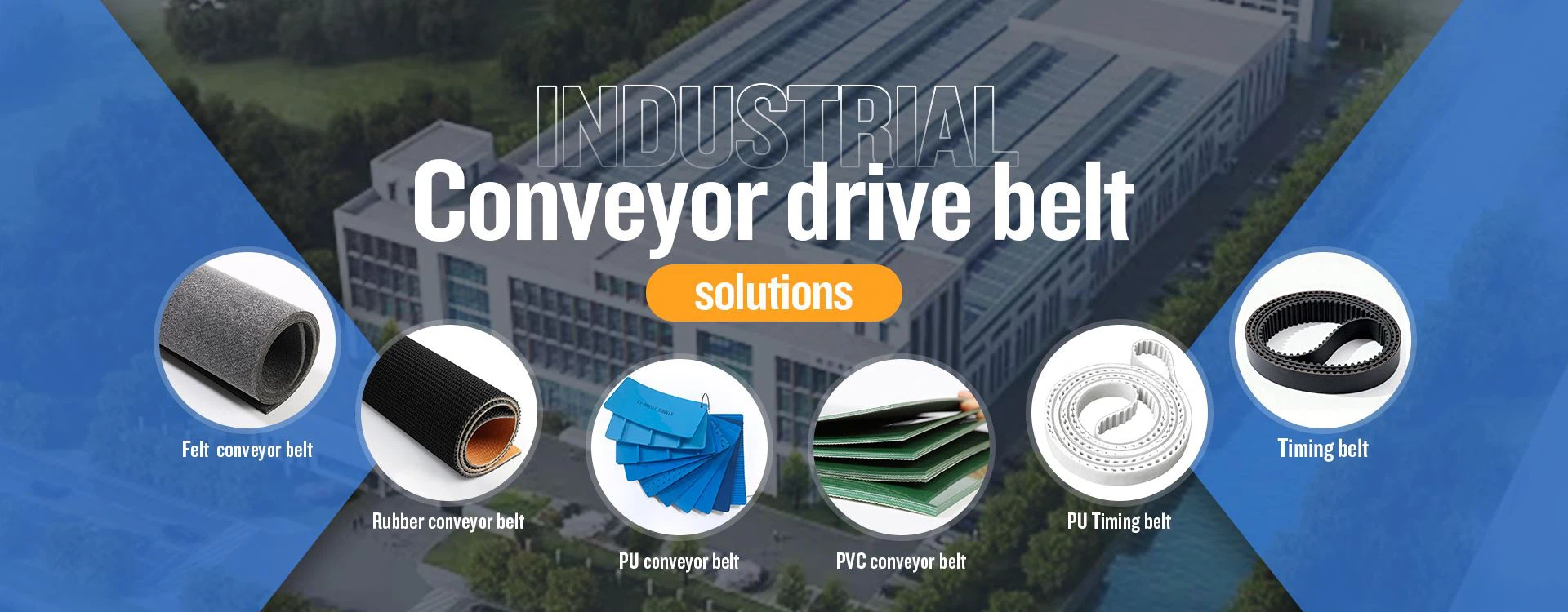
V. Latest Trends in Light Conveyor Belts (PVC/PU/PE) (The 800mm PVC You Are Concerned About)
Width: 800mm remains a globally recognized standard, mainly used in electronics, food, and logistics.
Material upgrade
Food grade: Free of plasticizers, washable, compliant with EU 10/2011 and FDA.
Anti-static/conductive: Surface resistance 10^6-10^9Ω, compatible with electronic/lithium batteries.
Enhanced wear resistance: New PVC formula, wear resistance increased by 30%, extended service life.
Process: Seamless thermoplastic butt joint (strength ≥90%), high-frequency welding, modular with baffle/skirt.
Vi. One-sentence Summary (2026 Industry Keywords)
Lightweight (aramid), low-carbon (bio-based/thermoplastic), intelligent (AI prediction), service-oriented (full life cycle), high-end (special scenarios)


