

Hey there! As a supplier of belt splicers, I often get asked a bunch of questions about our products. One question that pops up quite a bit is: "Can a belt splicer be used for splicing anti - static belts?" Well, let's dive right into this topic and find out.
First off, let's understand what anti - static belts are. Anti - static belts are designed to prevent the build - up of static electricity. Static electricity can be a real pain in many industrial settings. It can attract dust and debris, which might contaminate the products being transported. In some extreme cases, it can even cause sparks, leading to fires or explosions in environments with flammable materials. So, these belts are crucial in industries like electronics manufacturing, food processing, and pharmaceutical production.
Now, when it comes to belt splicers, we've got different types in the market. For example, we have the Conveyor Belt Water Cooling Splice Machine. This type uses water cooling to speed up the splicing process and ensure a strong and durable bond. Then there's the Conveyor Belt Air Cooling Splice Machine, which, as the name suggests, uses air for cooling. And we also have the Conveyor Belt Electronic Hot Air Heat Gun, which is more suitable for some smaller - scale or on - the - spot splicing jobs.
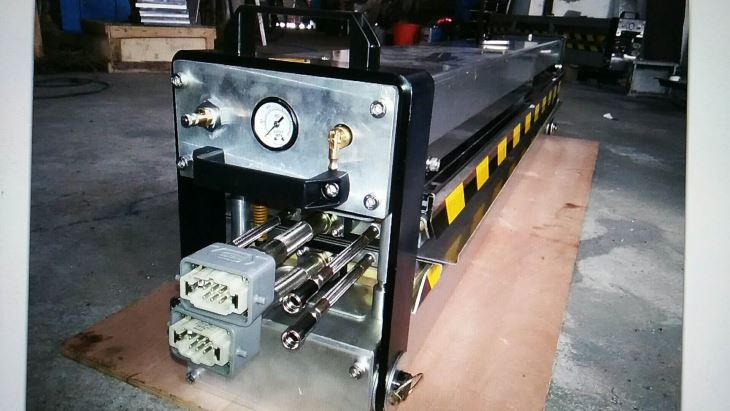

So, can these belt splicers work on anti - static belts? The short answer is yes, in most cases. But there are a few things to keep in mind.
Anti - static belts are usually made of special materials. Many of them are made of rubber or PVC with additives that provide the anti - static properties. Our belt splicers are designed to work with a wide range of belt materials. However, the key is to make sure that the splicing process doesn't damage the anti - static properties of the belt.
Let's talk about the splicing methods. There are mainly two types: mechanical splicing and vulcanization. Mechanical splicing involves using mechanical fasteners to join the ends of the belt. This method is quick and easy, but it might not be the best choice for anti - static belts. The fasteners can sometimes cause disruptions in the anti - static layer of the belt, reducing its effectiveness.
On the other hand, vulcanization is a better option. Vulcanization creates a seamless and strong bond between the belt ends. It uses heat and pressure to melt and fuse the materials together. But you need to pay attention to the temperature and pressure settings during the vulcanization process. If the temperature is too high, it might damage the anti - static additives in the belt. That's where our belt splicers come in handy. They are equipped with advanced temperature and pressure control systems, allowing for precise adjustments to ensure that the splicing process doesn't harm the belt's anti - static properties.
For instance, the Conveyor Belt Water Cooling Splice Machine offers a fast cooling process. The rapid cooling helps to lock in the shape of the spliced area and maintain the integrity of the belt materials, including the anti - static additives. The Conveyor Belt Air Cooling Splice Machine also provides a controlled cooling environment, which is important for preserving the anti - static features of the belt.
The Conveyor Belt Electronic Hot Air Heat Gun is great for small - scale splicing. It allows for more targeted heating, which can be adjusted according to the specific requirements of the anti - static belt. You can control the heat output and the distance from the belt to prevent overheating and damage to the anti - static layer.
Another aspect to consider is the preparation of the belt before splicing. You need to clean the belt ends thoroughly to remove any dirt, grease, or debris. Any contaminants on the belt ends can affect the quality of the splice and might also interfere with the anti - static properties. Our belt splicer packages often come with cleaning instructions and sometimes even cleaning products to help you get the best results.
When using a belt splicer for anti - static belts, it's also important to follow the maintenance schedule. Regular maintenance of the splicer ensures that it operates at its optimal level. This includes checking the heating elements, the pressure plates, and the cooling systems. A well - maintained splicer will provide more consistent and reliable splicing results, which is crucial for maintaining the anti - static performance of the belts.
In conclusion, a belt splicer can definitely be used for splicing anti - static belts, but it requires careful consideration of the belt material, splicing method, and proper operation of the splicer. Our range of belt splicers, including the Conveyor Belt Water Cooling Splice Machine, Conveyor Belt Air Cooling Splice Machine, and Conveyor Belt Electronic Hot Air Heat Gun, are designed to meet the needs of splicing anti - static belts while preserving their important properties.
If you're in the market for a belt splicer for your anti - static belts or have any questions about our products, don't hesitate to reach out. We're here to help you find the perfect solution for your industrial needs.
References:
- Industrial Conveyor Belt Handbook: Covers general information about conveyor belts, including anti - static belts.
- Technical manuals of our belt splicer products.